jQuery Refactoring: The Way Out of the Technical Dead End to Modern Performance
There was a time when the dollar sign $ ruled the internet. jQuery was the miracle weapon that ended browser wars and made interactive websites possible for everyone. But in the era of high-speed frameworks, Core Web Vitals, and ES6+, jQuery has often become a drag. At mironsoft, we treat jQuery as a valuable legacy that needs to make room for modern, lightweight architectures. We help you transform outdated "spaghetti code" into highly performant Vanilla JavaScript or reactive Alpine.js. Find out here how we pay down your technical debt and give your frontend a future free of legacy baggage.
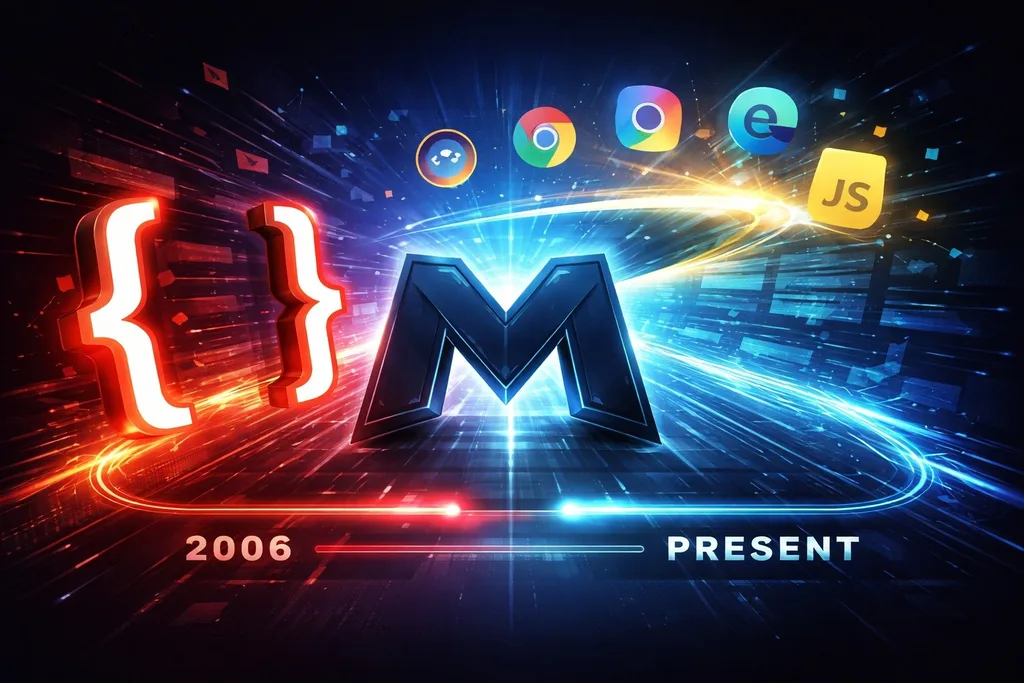
01. The Rise and Fall of a Legend: Why jQuery Has to Go
Around 2006, John Resig revolutionized web development with jQuery. It solved the problem of incompatible browser APIs and made DOM manipulation, animations, and AJAX requests child's play. Almost every online shop built between 2010 and 2020 (including Magento 1 and early Magento 2 versions) relies heavily on jQuery.
But today the tables have turned. Modern browsers natively support all of jQuery's functions. If you still load jQuery today, you force your customers' browsers to download and process a roughly 30 KB (gzipped) library just to run functions the browser already has built in. At mironsoft, we now see jQuery as technical debt. Every line of jQuery code we translate into modern JavaScript (Vanilla JS) reduces overhead, improves load time, and increases your system's security.
02. The Performance Dilemma: Every Byte Counts for Your Conversions
Google today judges websites strictly by the Core Web Vitals. In particular, Total Blocking Time (TBT) and Interaction to Next Paint (INP) suffer under outdated jQuery code. jQuery scripts are often loaded without control, blocking the parser and causing "stutters" during use.
At mironsoft, we run detailed code profiling. We identify scripts that are loaded but no longer used at all. In many grown Magento shops, we find fragments of sliders, tabs, or accordions that were replaced by more modern solutions long ago, but whose jQuery base still eats resources. Our refactoring process is a diet for your frontend: we shed the excess weight so your shop can breathe again.

03. Vanilla JS: The Pure Power of Modern Browser Standards
The best library is the one you don't have to load at all. Thanks to ES6 (ECMAScript 2015) and the standards that followed, JavaScript today offers native functions like querySelector, fetch, and classList, making jQuery completely redundant.
Our refactoring approach at mironsoft relies on Vanilla JavaScript. We rewrite your functions so they no longer need any external dependencies. This has three decisive advantages:
- Zero overhead: No library download needed.
- Future-proofing: Browser standards don't change as fast as framework trends.
- Maximum performance: Native browser functions are always faster than any abstraction layer.
We turn your "jQuery slider" into a lightweight web component that integrates seamlessly into modern frontends like Hyvä.
04. Strategic Modernization: From jQuery to Alpine.js
Sometimes simple Vanilla JS isn't enough when complex reactivity is required (e.g. for filters or the cart). In these cases, Alpine.js is our tool of choice. Alpine offers the reactive power of Vue or React, but is as lightweight as jQuery — without its drawbacks.
At mironsoft, we guide you through the technological transition. We isolate your critical jQuery components and convert them into declarative Alpine.js building blocks. This "migration path" is particularly economical because we don't have to swap out the entire system at once — we start where the pain (and the biggest performance gain) is greatest. The {M} brand stands for our expertise in smooth transitions.

05. Maintainability & Security: Why Legacy Code Endangers Your Business
Outdated jQuery code is a security risk. Many security vulnerabilities (XSS) in older websites are based on outdated versions of jQuery or its plugins (like old slider scripts). It's also becoming increasingly difficult to find qualified developers who want to work in outdated spaghetti code.
Refactoring with mironsoft increases your developer experience (DX). Your code becomes readable, testable, and secure again. We use modern build tools like Vite or Webpack to automate your JavaScript workflow and ensure only validated code reaches your live server. We turn your shop back into a place for innovation instead of repairs.
06. Refactoring in the Magento Environment: Breaking Up the Luma Stack
In Magento 2, jQuery is deeply rooted in the core (RequireJS). Many merchants shy away from the switch because they think it's "all or nothing." That's not true. We implement hybrid strategies. We can create jQuery-free zones in your shop in a targeted way — for example, on your most important landing pages built with the PageBuilder.
We use Tailwind CSS to decouple styling from JavaScript. This lets us swap out the logic without endangering the design. This is the stepping stone to the ultimate goal: a fully modern frontend built on Hyvä.
07. The mironsoft Audit: We Find the "Ghost Code"
Before we refactor, we analyze. Our audit process uses automated tools to track down unused functions. We can see exactly which script causes which CPU load. You receive a clear report:
Eliminate
Code that can be deleted (quick wins).
Replace
jQuery functions replaced with one-liners in Vanilla JS.
Modernize
Complex components that should be migrated to Alpine.js or React.

08. Conclusion: Modernize Now to Scale Tomorrow
jQuery's time is running out. A modern web experience requires modern code. Refactoring isn't a cost center — it's an investment in your shop's speed, your customers' satisfaction, and your developers' motivation. At mironsoft, you get the technical precision of a surgeon and the strategic vision of an architect. Let's free your shop from the burden of the dollar sign.
Is Your Code Ready for the Future?
Don't let outdated libraries slow down your performance. We analyze your JavaScript stack and create a roadmap for a modern, fast, and maintainable architecture.
Jetzt SEO-Check anfragenFrequently Asked Questions about jQuery Refactoring
Why is jQuery worse than modern JavaScript today?
jQuery was built to bridge browser incompatibilities that barely exist anymore today. Modern JavaScript (Vanilla JS) runs natively in the browser and needs no additional library, saving both download and processing time. Every time you use jQuery, you add an unnecessary abstraction layer that makes your shop slower than it needs to be.
Can jQuery simply be removed from Magento 2?
No, simply deleting it would break the entire shop (especially the checkout), since Magento's standard frontend relies heavily on it. However, we pursue an "island approach": we identify areas we can decouple and modernize. The most effective way to get rid of jQuery in Magento is to switch to a Hyvä frontend, which consistently replaces the entire old stack.
What does "spaghetti code" mean in the context of jQuery?
jQuery tempts developers to chain functions together through countless callbacks and global variables that are hard to follow. When many different plugins (sliders, menus, popups) manipulate the DOM simultaneously, a tangled web ("spaghetti") emerges, where a change in one place triggers unpredictable errors elsewhere. Refactoring untangles this chaos and moves to clean, modular structures.
How does refactoring improve my SEO rankings?
Refactoring reduces JavaScript bloat and CPU load in the browser. This directly improves Core Web Vitals, particularly LCP and INP (Interaction to Next Paint). Since Google uses these metrics as a ranking factor, a technical "cleanup" of your code is almost always rewarded with better search result placements and a lower bounce rate.
What advantages does Vanilla JS offer over frameworks?
Vanilla JS is "pure" JavaScript with no external dependencies. It offers the highest performance, since the browser can interpret the code directly without detours. It's also extremely future-proof, since browser standards remain stable for decades, while frameworks often become outdated or release incompatible updates after just a few years. We use Vanilla JS at mironsoft wherever maximum efficiency is required.
Can mironsoft replace existing jQuery plugins (e.g. sliders)?
Yes, we specialize in replacing outdated, heavy plugins with modern alternatives. Many tasks that once required a huge jQuery plugin (like CSS animations or simple carousels) can today be solved with minimal native code or the CSS standard. We build tailored, lean components for you that do exactly what you need — and not an inch more.
How secure is my shop with old jQuery code?
Old jQuery versions contain documented security vulnerabilities that can be exploited for Cross-Site Scripting (XSS) attacks. Since many third-party plugins are no longer updated, your shop remains permanently vulnerable. Refactoring removes these insecure dependencies and replaces them with modern, validated code that meets current security standards.
How long does a typical refactoring project take?
That depends on the scope of the technical debt. We usually start with an audit (1-3 days) to identify the biggest issues. A step-by-step refactoring of critical components can be implemented within a few weeks. We work in an agile manner and prioritize the measures with the biggest impact on your performance and maintainability, to guarantee a fast ROI.
Does my shop have to go offline during the refactoring?
No, we work exclusively on a staging environment (a copy of your shop). We swap out components piece by piece and test them intensively across various browsers and devices. Only once everything runs flawlessly do we release the modernized scripts on the live system. There's no downtime for your customers — they just notice a shop that keeps getting faster.
What's the advantage of Alpine.js over jQuery?
Alpine.js is "reactive" and "declarative". Instead of laboriously telling the browser how to change the DOM, we simply describe the state (e.g. "menu is open"). Alpine automatically takes care of the rest. This massively reduces the amount of code, is significantly less error-prone, and feels much smoother for the user than jQuery manipulations.
Can mironsoft also refactor code another agency wrote?
Yes, that's our daily business. We specialize in working our way into unfamiliar code structures, understanding the logic, and modernizing it. We uncover technical baggage that may have been overlooked during the original development, and bring your system back to a professional standard that matches current market norms.
How much does a comprehensive refactoring cost?
Costs depend on the time required and the complexity of your scripts. However, refactoring isn't a pure expense — it's an investment that lowers future development costs. Clean code can be extended and maintained much faster than outdated spaghetti code. After an initial audit, we create a transparent quote with a clear ROI forecast.
Will my custom features still work after refactoring?
Yes, that's the goal of our work. We don't change the functionality (what the user does), but the technical implementation (how the browser does it). In most cases, your features actually work better and more reliably after refactoring, since we eliminate logical bugs and increase stability across different browsers.
Does mironsoft also support refactoring AJAX requests?
Yes, we replace outdated $.ajax() calls with the modern native fetch() API. This enables significantly better error handling and cleaner asynchronous programming (async/await). Your data transfers between frontend and Magento backend become faster, more secure, and easier to debug as a result.
What is "code smell" and how do you find it?
Code smell refers to suspicious code structures that work but hint at deeper problems (e.g. functions that are too long, duplicated logic, or too many global dependencies). We use static analysis tools and manual code reviews to track down these spots in your jQuery code and fix them systematically before they turn into real bugs.
Can refactoring help reduce dependency on agencies?
Yes, absolutely. Clean browser standards and well-documented modern code are easy for any professional developer to understand. By freeing your system from cryptic spaghetti code, we make you less dependent on the specialized knowledge of individual people or agencies. Transparency and maintainability are, for us, the foundation of a fair partnership.
What role does image optimization play in JS refactoring?
Old jQuery sliders often use inefficient methods for loading images. As part of the refactoring, we implement native lazy loading and ensure JavaScript animations don't compete with the loading of heavy media files. A technically clean JavaScript frontend ensures your images load at the right time and in the right size.
Does mironsoft also support refactoring jQuery UI components?
Yes, jQuery UI is particularly heavy. We replace these outdated widgets (like date pickers, modals, or accordions) with modern, accessible HTML5 elements or lightweight web components. This not only reduces file size but also significantly improves usability on touch devices, which is crucial for your mobile customers.
Why should I choose mironsoft for refactoring topics?
We love the challenge of turning complex problems into simple, high-performance solutions. We've seen hundreds of Magento instances "under the hood" and know exactly where the typical bottlenecks are. As a specialized freelancer, I offer you the thoroughness and technical depth that successful refactoring requires — honest, direct, and results-oriented.
How do I start the refactoring process with mironsoft?
The first step is a no-obligation technology check. We take a look at your source code and your PageSpeed data. Then we discuss your business goals and create a roadmap for gradually modernizing your frontend. Just send us a message or give us a call — we'll get your shop fit for the web of tomorrow!
Cookie-Details
| Name | Anbieter | Laufzeit | Zweck |
|---|---|---|---|
Cookie-Details
| Name | Anbieter | Laufzeit | Zweck |
|---|---|---|---|
Cookie-Details
| Name | Anbieter | Laufzeit | Zweck |
|---|---|---|---|
Cookie-Details
| Name | Anbieter | Laufzeit | Zweck |
|---|---|---|---|