Magento SEO: The Art of Technical Dominance in Search Engine Results
DEEP DIVE
Magento Search Engine Optimization
Magento SEO: Technical Excellence as a Ranking Factor
Magento is a powerful engine, but raw power doesn't help if it never reaches the road. For us, SEO starts deep in the code – in the architecture, the database queries, and the load time.
The Central Ranking Levers at a Glance
RANKING FACTOR
PageSpeed
Official Google factor: Load time has been a confirmed ranking signal for years, and it gained even more weight through the Core Web Vitals.
> 90%
Less code complexity with Hyvä
JSON-LD
Structured data for rich snippets
HTTPS
Official security ranking signal
How ≠ What
Google no longer just evaluates what's on a page – it evaluates how the page technically performs. A store with poor Time to First Byte or blocked rendering will never reach its full potential.
Anyone running an online store on Magento (Adobe Commerce) already owns one of the most powerful engines in e-commerce. But raw power doesn't help if it never reaches the road. In the world of search engine optimization, Magento is both a blessing and a curse: it offers an unmatched depth of SEO settings, but in its standard setup it's often too heavy and technically complex for Google's algorithms. As a specialized Magento developer at Mironsoft, I don't treat Magento SEO as a list of keywords or simply writing meta tags. For me, SEO starts deep in the core of the system – in the architecture of the code, the efficiency of database queries, and the frontend's load time.
In this ultimate guide you'll learn how we perfect your Magento store technically, to the point where Google has no choice but to put you on page one.
Deep Dive
01
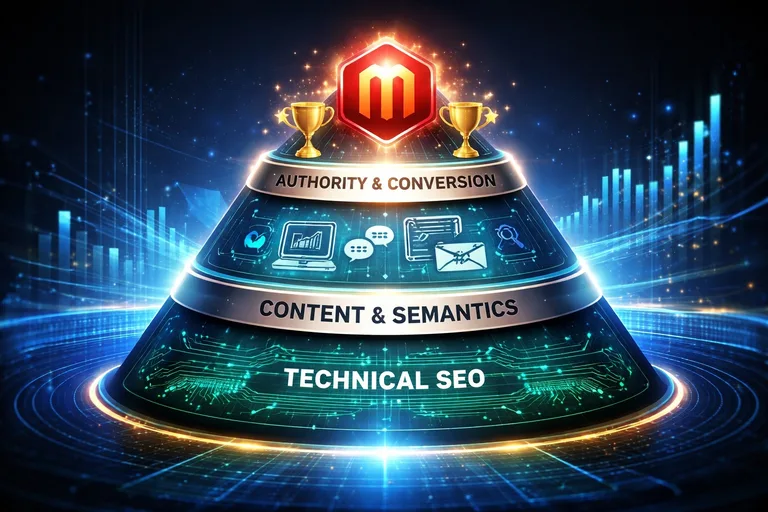
Technical SEO: Why Code Quality Is Today's Most Important Ranking Factor
Google has gotten smarter. The algorithm no longer just evaluates what's on a page – it evaluates how the page technically performs. This makes technical SEO the critical foundation, especially for Magento stores. A store with a poor Time to First Byte (TTFB) or blocked rendering will never reach its full potential.
At mironsoft, we focus on the levers that really matter:
- Indexing efficiency: We optimize your XML sitemaps and robots.txt so Google only crawls pages that actually add value. Duplicates caused by filter parameters are consistently excluded.
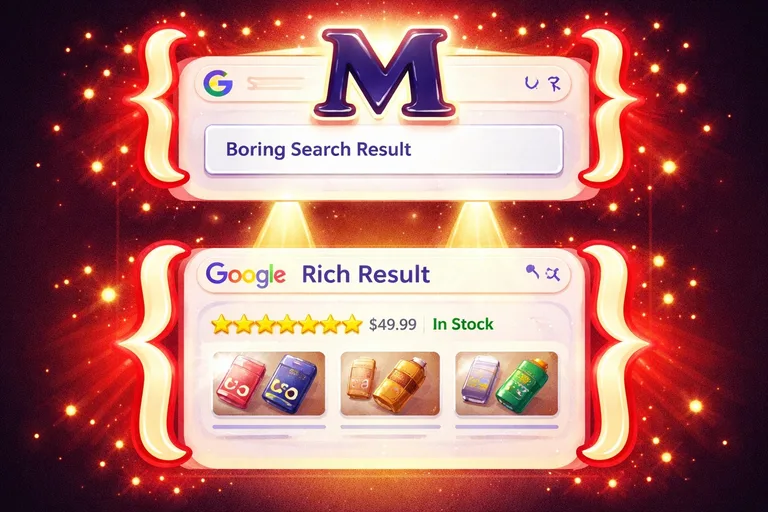
- Structured data (Schema.org): We implement JSON-LD markup down to the smallest detail. That way Google doesn't just see a product – it instantly understands price, availability, ratings, and brand, the foundation for eye-catching rich snippets.
- Canonical management: Magento's flexible categories tend to produce duplicate content. We ensure watertight canonical logic that unambiguously shows Google which URL is the "original source."
02
The Revolution: Hyvä Themes as an SEO Secret Weapon
It can't be said often enough: load time is an official ranking factor. The classic Magento frontend (Luma) is a ball and chain on any SEO strategy, thanks to its massive JavaScript overhead (Knockout.js, RequireJS). That's where Hyvä Themes comes in.
By switching the frontend to Hyvä, we reduce code complexity by over 90%. Your store doesn't just load faster – it natively meets the Core Web Vitals (LCP, CLS, INP) in the green zone. For Google, a Hyvä store is a signal of excellent user experience. Anyone still relying on Luma today is handing valuable SERP (search engine results page) positions to the competition.

03
The Perfect URL Structure and Architecture (Siloing)
Magento allows for extremely deep category nesting. But be careful: a structure that's too flat or too deep confuses users and search engines alike. At mironsoft, we implement strategic keyword siloing.
The goal is thematic clustering. We arrange your products in logical hierarchies supported by strong internal linking. That way, "link juice" flows deliberately from your strong category pages down to individual products. We also strip your URLs of clutter like ".html" (if desired) or unnecessary category paths, to create short, concise, keyword-rich URLs.
04
Content Commerce: Copy That Sells and Ranks
Good Magento SEO needs content that matches your customers' search intent. A bare product name isn't enough anymore. We help you use Magento as a content platform:
- Category copy with real value: We structure your category pages so they contain both advisory copy and your best products.
- Product descriptions: Unique content instead of copied manufacturer data. We use structured attributes to automatically turn technical spec sheets into readable facts.
- Blog & guides: We integrate WordPress or Magento's native CMS functionality to position your store as an expert resource. Whoever answers questions ("which spare part fits...?") wins the customer before the buying decision is even made.
05
International SEO: Think Global, Rank Local
Magento is world-class at multistore management. But international SEO is tricky. Without correctly implemented hreflang tags, Google doesn't know which language version is right for which user. This often means the German page ranks in the US, or vice versa.
We ensure a clean technical separation of your storeviews – whether via language directories (/en/), subdomains, or dedicated top-level domains. We make sure metadata, currencies, and local nuances are perfectly indexed for every region.
06
Image SEO: More Than Just Alt Tags
Images are often the biggest resource hogs in Magento. We optimize your visual search:
- WebP & AVIF: We automatically convert your images into modern formats to cut load time in half.
- Lazy loading: Images only load once they're about to enter the user's viewport.
-
Descriptive file names: Instead of
IMG_1234.jpg, your images are namedmagento-seo-service-mironsoft.jpg. That massively improves your ranking in Google Image Search.
07
Monitoring & Search Console: Data, Not Guesswork
SEO isn't a "set it and forget it" task. We set up comprehensive monitoring for you. We analyze your data in Google Search Console, find indexing errors, and track your keyword rankings. Through regular A/B testing of your meta descriptions, we optimize your click-through rate (CTR). Because what good is ranking #1 if nobody clicks?
08
Why mironsoft Is Your Strategic SEO Partner
Most SEO agencies hand you a list of issues but can't fix them in the Magento core themselves. I'm a developer and an SEO strategist. I don't just find the problem – I write the code to fix it too.
- Performance SEO: I make your store lightning fast – the most important lever for modern rankings.
- Magento expertise: I know Magento's tricky default settings that hold back your SEO (e.g., session IDs in URLs).
- ROI focus: We don't chase every keyword – we focus on the terms that actually move your revenue.
Conclusion: Become the Undisputed #1
Magento SEO is a marathon, not a sprint. But with the right technical foundation and a clear strategy, it's the surest path to sustainable, free traffic. Don't leave your visibility to chance or generic off-the-shelf plugins. Rely on technical expertise and tailor-made optimization that future-proofs your store. At mironsoft you get the complete package: code excellence plus SEO strategy.
Ready for page one? Let's analyze your Magento store today and unleash the full potential of your product data.
Request a Free SEO AuditFrequently Asked Questions (FAQ) About Magento SEO
Is Magento SEO-friendly out of the box?
Magento offers an excellent foundation with many native settings for meta tags, sitemaps, and URL rewrites. However, the default setup is often too complex and "heavy," which negatively affects load time (Core Web Vitals). Without expert configuration and technical optimization (e.g., avoiding duplicate content from filters), Magento comes nowhere near its full SEO potential.
How important is PageSpeed for my Magento ranking?
PageSpeed has been an official ranking factor for years, and it's gained even more importance through the Core Web Vitals. A slow Magento store is systematically ranked worse by Google than a faster competitor's site. Poor performance also leads to higher bounce rates, which Google interprets as a negative user signal, dragging your ranking down further. That's why we consistently optimize your store for speed.
What are the most common SEO mistakes in Magento stores?
The most common mistakes include duplicate content from uncontrolled filter URLs (layered navigation), missing or broken hreflang tags on international stores, and inadequate structured data. Technical roadblocks like session IDs in URLs, or a misconfigured Varnish cache that swallows SEO headers, are also frequently seen issues. We run a deep technical audit to eliminate these "visibility killers" precisely.
Do I need an extra SEO module for Magento?
While Magento's core already brings a lot to the table, specialized SEO suites (like those from Amasty or Mirasvit) massively ease the daily workload. These modules offer advanced features for managing meta-data templates, automated cross-links, and improved XML sitemaps. We advise you on choosing the right module and configure it to optimally support your SEO strategy without unnecessarily bloating the system.
How do I handle duplicate content from product filters?
Product filters often generate thousands of URLs with nearly identical content, which can massively disrupt your site's indexing. We solve this with a combination of canonical tags, "noindex" directives for specific filter combinations, and using AJAX for frontend filtering. That way your store stays flexible for users while Google only sees the important category pages.
What's the advantage of Hyvä Themes for Magento SEO?
Hyvä is currently the best "SEO frontend" for Magento. It eliminates nearly all the JavaScript bloat of the default theme, leading to extremely fast load times and perfect Core Web Vitals. Hyvä also produces very clean HTML markup that Google's crawlers can read and understand far more efficiently. Switching to Hyvä is often the single most effective step to boost your organic rankings.
How do I optimize my images for Google Search?
Besides descriptive file names and concise alt tags, the technical delivery is what really matters. We implement automatic conversion to WebP formats and ensure correctly sized images via srcset. Optimized image SEO doesn't just bring more traffic through image search – it also improves overall load time and, in turn, your product pages' ranking.
Why does my store lose rankings after a Magento update?
That shouldn't happen with a professional update. Possible causes include changed URL structures, lost metadata, or broken cache configurations after the update. We technically accompany your Magento upgrades and use before/after comparisons to make sure every SEO-relevant factor stays untouched, keeping your visibility stable.
What is "search intent," and how do I account for it in Magento?
Search intent describes the goal a user has in mind with their search (e.g., information, purchase intent, or navigation). In Magento, we need to serve the right page for each intent: category pages for commercial searches ("buy shoes"), product detail pages for specific purchase intent, and blog posts for informational searches ("which running shoes for beginners?"). We align your content structure with these intents to maximize relevance for Google.
Do customer reviews help with SEO?
Yes, massively! Customer reviews provide fresh, unique content (user-generated content) on your product pages, and Google loves it. We can also mark up these reviews with structured data (Schema.org) so the familiar yellow stars appear in search results. That boosts your click-through rate (CTR) and signals high quality to Google.
How do I handle sold-out products from an SEO perspective?
A common mistake is deleting sold-out products, which leads to 404 errors and lost rankings. If a product is only temporarily out of stock, the page should stay online (with a notice and an alternative). If it's gone for good, we set a 301 redirect to the successor product or the parent category. That preserves the page's link equity and offers users a meaningful alternative.
What is "siloing," and how is it implemented in Magento?
Siloing refers to thematically grouping content within a website's architecture. In Magento, we implement this through a clear category hierarchy and deliberate internal linking. Products within a "silo" (e.g., "men's shoes") primarily link to each other and to the main category. That shows Google the topical relevance of your site for that specific area and strengthens the authority of your category pages.
Do I need a blog for my Magento store?
A blog is one of the most powerful tools for generating traffic through long-tail keywords and informational search queries. It lets you engage potential customers early in their buying journey and build trust. We integrate powerful blog solutions directly into your Magento store, technically optimized to interlock perfectly with your product catalog.
Do SSL certificates and security affect Magento ranking?
Yes, HTTPS is an official ranking signal. An insecure site gets flagged as such by browsers, which massively increases bounce rate – a negative signal for Google. Google also indirectly evaluates a store's overall security and maintenance (up-to-date patches) through its stability and the absence of malware. A secure store is therefore always a better-ranking store too.
How do I get started with SEO optimization for my Magento store at mironsoft?
It starts with a deep-dive technical audit. We analyze your store using professional tools and human expertise, checking for every SEO roadblock. From there, we build a prioritized roadmap – from quick technical fixes to a long-term content strategy. Just send us a message or give us a call – we'll take your visibility to the next level!
Cookie-Details
| Name | Anbieter | Laufzeit | Zweck |
|---|---|---|---|
Cookie-Details
| Name | Anbieter | Laufzeit | Zweck |
|---|---|---|---|
Cookie-Details
| Name | Anbieter | Laufzeit | Zweck |
|---|---|---|---|
Cookie-Details
| Name | Anbieter | Laufzeit | Zweck |
|---|---|---|---|