Magento Multistore & Internationalization: Your Gateway to Global E-Commerce
DEEP DIVEMagento Multistore International
Magento Multistore International: Go Global, Win Local
Internationalization is more than translation – currencies, tax law, and hreflang strategy decide whether you're perceived as a market leader abroad. Magento's multistore architecture makes it possible.
Anyone looking to grow in online retail sooner or later hits a glass ceiling in domestic markets. The logical next step is expanding across borders. But internationalization is far more than translating text. It's a highly complex challenge spanning different currencies, legal frameworks, country-specific tax rates, and logistical nuances. Magento (Adobe Commerce) was built from the ground up to master this complexity.
With its unique multistore architecture, Magento lets you manage any number of country stores through a single technical instance. As a specialized Magento developer at Mironsoft, I help you configure this architecture so you can operate globally while being perceived as a local market leader. In this guide, you'll learn how we make Magento the foundation of your global success story.
AI generated
01
Understanding the Magento Hierarchy: Website, Store, and Store View
The key to internationalization lies in understanding Magento's three-tier hierarchy. Many retailers make the mistake of setting up a separate Magento installation for every country – an administrative nightmare. Instead, we use the native scoping system:
Level
Meaning
Global
The top level for default settings and main inventory.
Website
Usually separates tax and legal entities – its own prices, customer records, payment methods. Ideal for, e.g., EU vs. US.
Store
Groups categories within a website – e.g., fashion vs. accessories.
Store View
The lowest level, primarily for language – e.g., German, English, French.
Assessment based on the statements in this chapter.
02
Currencies and Pricing: Shop Local, Bill Global
Nothing scares off a customer more than prices in a foreign currency or unexpected conversion fees at checkout. Magento lets us define individual currencies for each store view. At mironsoft we implement strategies for precise pricing:
Auto currency switching: Via geo-IP detection, we route the customer directly to the right currency and language.
Fixed vs. dynamic prices: We can pull daily exchange rates via APIs (e.g., Fixer.io) or set fixed price points for each country (e.g., €19.99 vs. $24.99), protecting your margins against currency fluctuations.
Rounding rules: We make sure converted prices always look "clean" (e.g., .90 or .99 endings) instead of odd cent amounts.
03
Tax Logic and Legal Compliance: The Minefield of the EU and US
Internationalization also means making friends with the tax office. In the EU, the OSS procedure (One-Stop-Shop) is mandatory; in the US, we deal with sales tax at the state level. My service covers the technical implementation of these rules:
Dynamic tax calculation: Magento calculates tax in real time based on the customer's shipping address.
VAT ID validation: For B2B customers, we integrate VIES interfaces to automatically validate VAT ID numbers for tax-free intra-community deliveries.
Legal copy: We configure store-specific CMS blocks for terms & conditions, privacy policy, and right of withdrawal, so you stay legally compliant in every country.
04
International SEO: Showing Google the Way with Hreflang
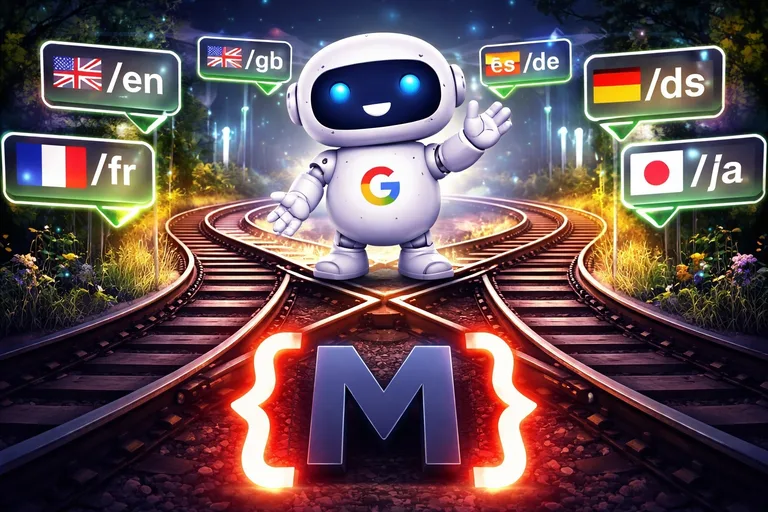
The biggest nightmare in multistore projects is duplicate content. If Google doesn't understand that your English page for the US and your English page for the UK serve different purposes, it penalizes you. We implement an airtight hreflang strategy:
1Every page gets references in its header to all its international sibling URLs.
2We use "x-default" for users without a specific country match.
3We optimize the XML sitemaps to include country-specific signals.
That way, you ensure US customers land in US search results instead of on your German page with high shipping costs.
AI generated
05
Content Management in Multistore: Efficiency Instead of Chaos
A multistore setup must not multiply your team's daily workload. We make optimal use of Magento's inheritance logic. When you change a product image, that change automatically flows into all 20 country stores – unless you want to use a different image for the Arabic market. We configure your backend so you maintain global attributes centrally and override local attributes (like translations) selectively.
06
Logic and Checkout: Respecting Local Preferences
A French customer pays differently than a German one. While "buy on account" dominates in Germany, it's credit card in Italy or iDEAL in the Netherlands. We adapt your checkout per country:
Payment Gateways
We integrate country-specific payment providers (e.g., Klarna, Mollie, Adyen).
Shipping Methods
Integration of local carriers like DHL, UPS, Royal Mail, or La Poste.
Warehouse Management (MSI)
We use Magento's Multi-Source Inventory to fulfill orders from the warehouse closest to the customer – saving on shipping costs and the environment.
07
Performance in a Global Context: CDNs and Edge Caching
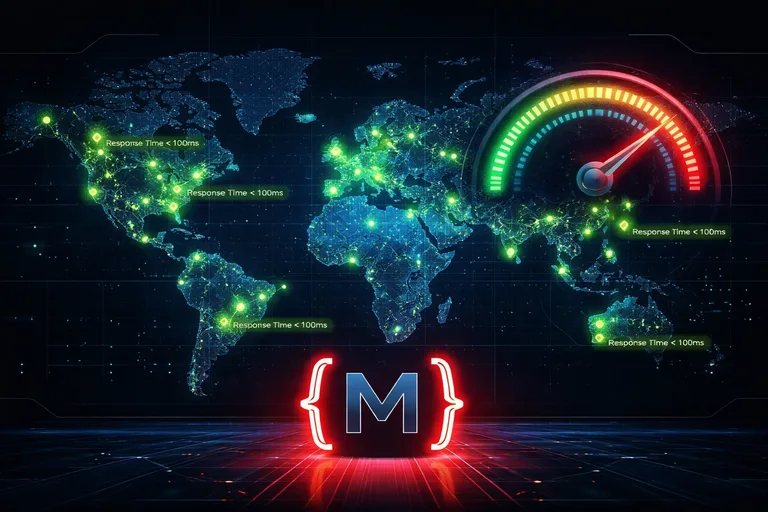
If your server is in Frankfurt, a customer in Sydney will face long load times. For successful internationalization, at mironsoft we implement a Content Delivery Network (CDN) like Cloudflare or Fastly. Your static content gets mirrored globally on edge servers. Combined with a fast Hyvä frontend, we achieve global top scores on Core Web Vitals, no matter where your store is accessed from.
AI generated
08
Why mironsoft Is Your Partner for the World Tour
Internationalization isn't a project for beginners. As a freelancer, I bring experience from numerous global rollouts. I'm not just a programmer – I'm your strategic companion.
Scoping expertise: I know exactly which settings belong at the website level and which at the store-view level.
SEO focus: I protect your rankings during expansion.
Technical precision: From VAT ID validation to currency converters – I make sure the technology works silently in the background.
Conclusion: The World Is Waiting for Your Products
A Magento multistore system is the most powerful weapon in an online retailer's arsenal. It lets you conquer the entire world with a single codebase. Yes, the path to perfect internationalization is technically demanding, but the scaling possibilities are nearly unlimited. At mironsoft you get a technically excellent implementation that masters every cultural and legal hurdle. Let's expand the map of your success together.
Ready for the global market? Let's discuss in a free consultation how to make your multistore setup a success.
Frequently Asked Questions (FAQ) About Magento Multistore
What's the difference between a Magento website and a store view?
In Magento, a website represents an independent business entity with its own cart, customer base, and tax logic. A store view, on the other hand, is the subordinate level primarily used for language display (localization). We typically use websites to separate countries with different currencies or tax systems (e.g., US vs. EU), while store views within those websites handle the various country languages.
Does a multistore setup with many languages slow down my store?
With correct technical configuration, the number of store views has no noticeable impact on frontend performance for the end customer. Magento is built to efficiently manage hundreds of store views. What matters is a powerful caching system (Varnish/Redis) and clean index management, to ensure database queries stay lightning fast even with massive translation tables – an area we specialize in at mironsoft.
How do I avoid duplicate content across international country stores?
Duplicate content is a high risk when similar content is offered in the same language across different countries (e.g., Germany, Austria, Switzerland). We solve this by strictly implementing hreflang tags, which show Google precisely which URL is meant for which region. We also use canonical tags and country-specific XML sitemaps, to underline the uniqueness of your content per market and protect your rankings worldwide.
Can customers use one shared login across all my country stores?
That depends on how the websites are configured. Magento allows setting the "customer scope" to global, so a customer can shop across all your stores worldwide with the same credentials. Alternatively, we can restrict the scope per website, if you want to keep your brands strictly separate. We're happy to advise on which setting makes the most sense for your customer retention and data management.
How are exchange rates updated in Magento?
Magento offers built-in interfaces to currency services like Fixer.io or the European Central Bank. We configure automated cron jobs that update your exchange rates daily or hourly. We can also define custom markups to buffer currency risk. For full control, we often implement fixed prices per currency, so your marketing price points (e.g., 9.99) stay stable in every country.
Does Magento Multistore support different tax rates per country?
Yes, Magento's tax logic is extremely flexible. We configure tax classes and rules that automatically calculate the correct rate based on the customer's shipping address. This includes support for complex requirements like the EU-wide OSS scheme or US sales tax interfaces (like Avalara or Vertex). That ensures your invoices are legally sound in every country.
Can I offer different assortments in different countries?
Absolutely. By assigning products to specific websites, you control precisely which item is available in which country. We can also create store-specific categories and landing pages. That lets you tailor your offering perfectly to local market requirements, cultural differences, or legal restrictions, without losing track of your central inventory.
How does shipping cost calculation work in a multistore setup?
We define individual shipping rules for each website and integrate local logistics partners. Through table rates, we can store complex matrix calculations (weight, price, destination region) per country. We also use Magento's Multi-Source Inventory (MSI) to optimize shipping costs, by automatically selecting the warehouse geographically closest to the customer, cutting delivery times and costs.
Can I use a different design (theme) for each country?
Yes, Magento allows assigning different themes at the store-view level. Usually, though, we use a central "master theme" (ideally Hyvä) and work with local CSS adjustments or CMS blocks. That way you keep a consistent global brand appearance while still being able to account for cultural design preferences or seasonal campaigns in individual countries, without doubling your technical maintenance overhead.
How do we handle automatic language detection (geo-IP)?
We implement geo-IP modules that determine a visitor's location based on their IP address. The user then either gets a discreet notice (banner) that a country-specific store exists, or gets automatically redirected. We strictly follow Google's crawler guidelines here, so automatic redirection doesn't hinder your indexing in other languages.
How are translations efficiently managed in Magento Multistore?
For simple text, we use Magento's inline translation or CSV language packs. For large product catalogs, we recommend connecting a PIM system (like Akeneo) or specialized translation extensions that link to agencies or AI tools (DeepL API). This automates the translation workflow and ensures your product descriptions maintain high quality and consistency worldwide.
Can I offer different payment methods per country?
Yes, payment method configuration can be controlled individually at the website level. We integrate global players like Stripe or Adyen, which automatically surface locally preferred payment methods (e.g., iDEAL in the Netherlands, Bancontact in Belgium, or Giropay in Germany). That builds trust in the checkout process and is one of the most important factors for reducing cart abandonment among international customers.
Do I need to buy a separate domain for every country?
That's a strategic decision. Magento supports top-level domains (shop.de, shop.fr), subdomains (fr.shop.com), and subdirectories (shop.com/fr/) alike. From an SEO perspective, dedicated TLDs often provide the strongest local signals, while subdirectories best reinforce the authority of your main domain. We're happy to advise on which domain structure best fits your marketing goals and budget.
Does Magento Multistore also support different email templates?
Yes, for each store view we can store individual email templates (order confirmation, shipping info, etc.) in the respective country's language. We adapt not just the text but also branding, legally required footer information, and country-specific service contact details. That way, every customer receives communication that feels completely local and trustworthy.
How do I get my international Magento project started with mironsoft?
It starts with an expansion workshop. We analyze your target markets, the technical requirements around currencies and taxes, and your SEO goals. Based on that, we build an architecture concept for your multistore setup. Just send us a message or give us a call – we're looking forward to getting your store ready for the world stage and technically securing your global scale-up.