GraphQL API: The Precise Language for High-Performance E-Commerce
GRAPHQL APITechnology Hub
GraphQL: The Central Nervous System for Modern Magento Shops
Where conventional REST APIs hit their limits and waste valuable bandwidth, GraphQL redefines the rules of communication. It lets us query data with surgical precision — exactly what's needed, no slower.
Query depth limiting & complexity analysis against deep-nesting attacks
The era of rigid, bloated data interfaces is over. Where conventional REST APIs hit their limits and waste valuable bandwidth, GraphQL redefines the rules of communication. At mironsoft we use GraphQL as the central nervous system for modern Magento shops and headless architectures. Find out here why GraphQL is the technological enabler for lightning-fast frontends like Hyvä, and how we use it to revolutionize your system landscape.
AI generated
01
What Is GraphQL and Why Is It the New Standard?
GraphQL was originally developed by Facebook to solve a problem every e-commerce operator knows: inefficient data transfer to mobile devices. In the classic REST world, we often had to query five different endpoints to build a single product page. GraphQL flips this on its head.
At mironsoft we use GraphQL to give your shop unprecedented lightness. Instead of flooding the customer's browser with data, we send only exactly the fields relevant to the current view. Combined with modern caching strategies, we achieve load times that feel like magic to the user.
02
Overfetching & Underfetching: The End of Data Waste
In web development we often talk about two major pain points with APIs: overfetching (200 lines of JSON when you only need name and price) and underfetching (three extra requests to get category and images).
GraphQL eliminates both problems. With a single request, your frontend gets exactly what it ordered. For mironsoft, this is the key to mobile-first optimization.
AI generated
03
GraphQL in Magento: The Engine Behind Hyvä and PWA Studio
As Magento specialists, we know: Adobe has declared GraphQL the strategic standard for communication between backend and frontend. Whether you rely on PWA Studio or take the efficient route with Hyvä Themes — GraphQL is the protocol pulling the strings in the background.
At mironsoft we optimize your Magento GraphQL interfaces down to the last detail. We write custom resolvers to serve data from your custom extensions or ERP system performantly.
04
Typed Schemas: Security Through Structure
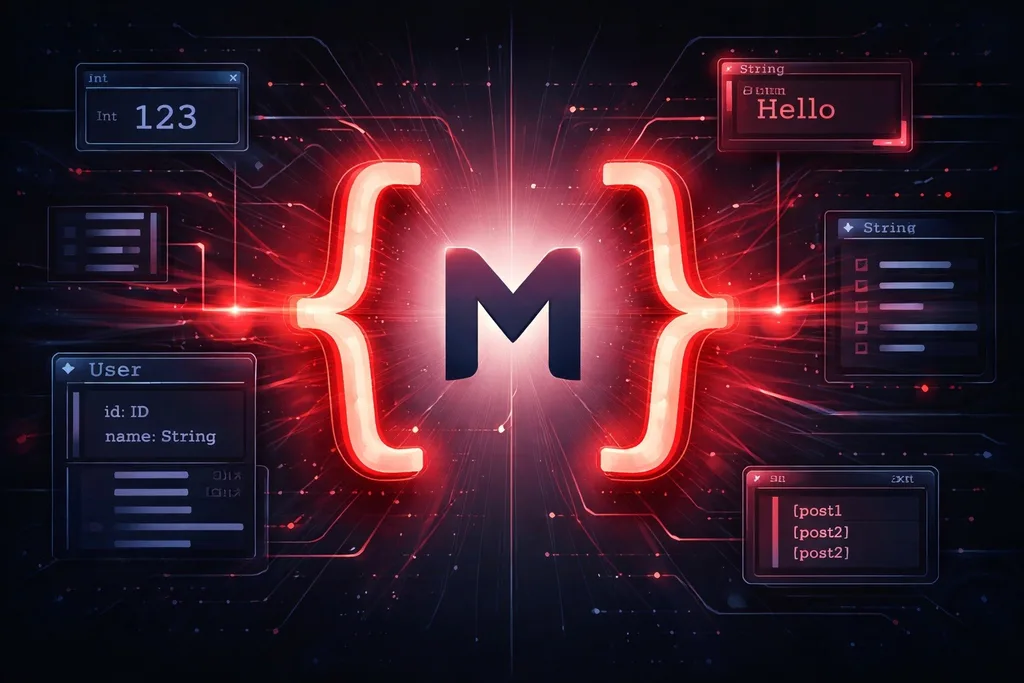
An underrated advantage of GraphQL is the schema. Unlike REST, a GraphQL API is strictly typed. We define precisely which data exists and what format it takes. It's like a contract between backend and frontend.
For you as a customer that means a drastically reduced error rate. We use tools like introspection, so the frontend team can always see what data is available.
05
Caching Strategies for GraphQL: Enterprise-Level Speed
Since GraphQL requests are often sent via HTTP POST, conventional browser caches don't apply automatically. This is where implementations separate the wheat from the chaff. At mironsoft we implement advanced caching layers:
Varnish integration: GraphQL queries made cacheable.
Persisted queries: Complex queries stored server-side, fetched via short IDs.
CDN optimization: Fastly or Cloudflare for geographic proximity to the customer.
06
Mutations: Writing Data Securely
GraphQL can not only read (queries) but also write (mutations). Whether a customer changes their address, adds a product to the cart, or writes a review — it all happens through mutations. We secure these processes with strict authentication procedures (OAuth2 / JWT). Every mutation at mironsoft gets validated before it touches your Magento database.
07
Real-Time E-Commerce With Subscriptions
Imagine your stock level changes or a price gets adjusted, and the customer sees it instantly without reloading the page. With GraphQL subscriptions (via WebSockets), we implement real-time features that bring your shop to life.
AI generated
08
Why mironsoft Is Your Partner for GraphQL
GraphQL is a powerful tool that, if misused ("deep nesting attacks"), can bring your server down. At mironsoft we understand the pitfalls. We implement query depth limiting and complexity analysis to protect your API against overload. We don't build standard interfaces — we build high-performance, secure, future-proof data architectures for your e-commerce business.
AI generated
Bring Your Data to the Customer at Light Speed
Choose an API technology that makes no compromises on performance. Let's develop your GraphQL strategy together — for a next-generation e-commerce experience.
The decisive advantage is flexibility and efficiency in data transfer. While REST endpoints return fixed data structures (often too much or too little), GraphQL lets the frontend precisely define which fields it needs. This massively reduces network load and enables querying complex data from different sources with a single API call, a performance win especially for mobile users.
Is GraphQL available in Magento 2 by default?
Yes, Adobe has massively expanded GraphQL since Magento version 2.3 and made it the primary standard for headless scenarios and PWAs. From version 2.4.x, almost all business-critical functions like cart, checkout, and customer management are fully covered via GraphQL. At mironsoft we also extend this standard with custom resolvers, to make your specific business logic available via the API too.
How secure is a GraphQL API compared to REST?
GraphQL is fundamentally just as secure as REST, but requires specialized knowledge to secure. Since attackers could theoretically send very complex and deeply nested queries, at mironsoft we implement security measures like query depth restrictions and complexity checks. Combined with modern authentication procedures (OAuth2/JWT) and strict input validation, we build APIs that meet the highest enterprise security standards.
Can GraphQL responses be effectively cached?
Yes, that's one of our focuses in performance optimization. While classic HTTP caching is harder with GraphQL (because of POST requests), we use techniques like "persisted queries" and specialized cache layers in Varnish or Fastly. We also use client-side caching (e.g. Apollo Client or TanStack Query) to hold already-loaded data in the browser, massively increasing perceived speed for the user.
What does "typing" mean in the context of GraphQL?
Typing means every data field in the API has a fixed, defined data type (e.g. String, Integer, Boolean, or a specific product object). This creates a clear structure and serves as documentation for developers. Errors get caught at development time this way, not once the customer is already in the shop. This strictness ensures extremely high stability and massively eases connecting third-party systems.
Does GraphQL also support connecting ERP or PIM systems?
Absolutely. GraphQL is the ideal technology for "federated gateways." We can unify data from different sources — for example product details from a PIM, prices from the ERP, and customer reviews from Magento — into a single GraphQL schema. The customer or frontend only sees one unified API, while we orchestrate the complex queries to different systems highly efficiently in the background.
Headless commerce is based on the complete separation of frontend and backend. GraphQL acts as the perfect communication layer here, since it lets the frontend team query exactly the data needed for a new design or feature, independent of the backend team. This accelerates innovation cycles and makes it possible to bundle tailored data packages for every channel (web, app, kiosk) without touching the Magento core.
Does GraphQL slow down my Magento backend?
With a poor implementation (the "N+1 query problem"), that can happen. At mironsoft, though, we use techniques like "dataloader" and batching to bundle database queries and minimize load. A correctly optimized GraphQL setup is often even more performant than conventional PHP frontends, since we can control computational load more precisely. Clean backend architecture is the prerequisite for high speed in the frontend.
What are GraphQL "resolvers"?
A resolver is a small PHP function in the Magento backend that contains the logic to compute the value for a specific GraphQL field. If, for example, you query a product's stock level via the API, the resolver is responsible for fetching that number from the database. We optimize these resolvers so they only activate when the field was actually requested, massively saving resources.
Can I use GraphQL for mobile apps too?
Yes, GraphQL is the preferred technology for mobile apps (iOS/Android). Since mobile connections are often unstable or have high latency, reducing data volume and the number of requests through GraphQL is a huge advantage. A single query delivers all the information for the app screen, saving battery life and making the app noticeably faster and smoother.
What is "introspection" in GraphQL?
Introspection lets developers ask the API itself: "What data can you give me?" The system then returns the entire schema including types and descriptions. Tools like "GraphQL Playground" use this to enable autocomplete and live validation during development. We disable this feature in the live environment for security reasons, though, to avoid giving potential attackers information about the structure.
Do I have to replace my REST API if I want to use GraphQL?
No, both technologies can coexist without issue. We often still use REST for server-to-server communication (e.g. ERP sync), since GraphQL's flexibility matters less there. For communication between browser/app and your Magento shop, though, GraphQL is the modern gold standard. At mironsoft we help you find the right balance and run both worlds stably.
Does GraphQL also support file uploads (e.g. product images)?
Yes, through extensions like multipart requests, we can implement file uploads via GraphQL too. This is useful for customer reviews with photos or personalized products. Usually, though, we use specialized upload endpoints and only link the metadata via GraphQL, to optimally combine the advantages of both approaches — efficient data queries and stable file transfer.
In B2B, data is often extremely complex (individual price lists, stock per warehouse location, different company entities). GraphQL lets us query this deeply nested information efficiently without overloading the frontend. We can also grant B2B customers direct API access to your schema, so they can programmatically integrate your catalog into their own procurement systems, creating enormous customer retention.
How do I start a GraphQL project at mironsoft?
Best with a technical architecture workshop. We analyze your existing system landscape and identify the critical data flows. We create a schema design tailored to your business goals and performance requirements. Just send us a message or give us a call — we look forward to bringing your shop to the next technological level!